
Seven Commonest Problems With Cashew Nuts
페이지 정보
작성자 Jestine 작성일26-04-04 13:55 조회189회 댓글0건본문
| 인테리어 종류 | 주거공간 |
|---|---|
| 방문경로 | 지인소개 |
| 전화번호 | |
| 휴대전화 | |
| 주소 | |
| 면적 | |
| 해당층 | |
| 예산 | |
| 예정일 |
 This course of requires excessive method to make sure the cashew nuts are not broken and the shells are completely eliminated. This process requires high technique to make sure the cashew nut is not damaged and the silk shell is completely eliminated. Structure: Thinner in comparison with the outer arduous shell, the silk shell closely encases the cashew nut, protecting it from environmental impacts after the arduous shell has been removed. Description: The outermost shell of the cashew nut may be very onerous and sturdy, serving to to protect the nut inside from exterior environmental impacts. Characteristics: The silk shell is often dark brown and covers the entire cashew nut, helping to guard the nut from environmental impacts earlier than being removed during processing. The shell removal process requires meticulousness and excessive approach to make sure the cashew nuts reach the very best quality and are secure for shoppers. The strategy of eradicating the silk shell requires meticulousness and excessive technique to make sure the cashew nut reaches the best quality and is safe for shoppers. The silk shell of cashew nuts, additionally identified because the inner thin shell, is a protective layer that surrounds the cashew nut after the outer arduous shell has been removed. The silk shell, additionally identified because the internal skinny shell, surrounds the cashew nut after the laborious outer shell has been removed.
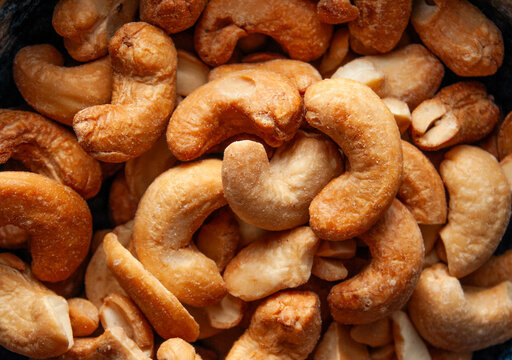 Not protected to eat: As a result of containing urushiol, the silk shell just isn't safe to eat and must be completely removed before the cashew nut will be dropped at the market. Contact with the silk shell can cause pores and skin irritation and health points if not dealt with correctly. This substance may cause skin irritation and allergic reactions if it comes into direct contact. 4. Can cashew shells be eaten? The grading system helps decide the quality and value of the cashew kernels. W180: Largest complete cashews, with 180 kernels per pound. SW180: Largest scorched whole cashews, with 180 kernels per pound. W320: Smallest whole cashews, with 320 kernels per pound. SW320: Smallest scorched entire cashews, with 320 kernels per pound. Butts: These are the smallest and least desirable parts of the cashew kernel. They are graded based on the number of kernels per pound. SW240: Smaller than SW210, with 240 kernels per pound. W240: Smaller than W210, with 240 kernels per pound. SW210: Slightly smaller than SW180, with 210 kernels per pound.
W210: Slightly smaller than W180, with 210 kernels per pound. They're additionally graded based on the variety of kernels per pound. Unsalted Cashews: These are raw or roasted cashews without any added salt. Salted Cashews: These are roasted cashews which have been seasoned with salt. Do cashew nuts have shells? Cashew Milk: A dairy-free different to milk, made by blending cashews with water. Description: Cashews with a purple or pink shell, retaining pure nutrients and flavor. Roasted Cashews: These cashews are roasted to boost their taste and give them a crunchy texture. They are often used in cooking and baking, as they retain their natural taste and nutrients. Description: Cashews with a black or darkish-coloured shell, retaining pure nutrients. Description: Unprocessed cashews, usually with a natural inexperienced shell. Biofuel: The onerous shell of cashew nuts can also be used as biofuel or natural fertilizer after processing. Characteristics: This silk shell additionally contains urushiol and must be completely eliminated before the cashew nut could be consumed. Description: After the outer hard shell is removed, the cashew nut is left with a thin inner silk shell. It fully encases the nut inside, providing a powerful protective layer.
Cashew nuts are protected by an outer arduous shell, identified because the "cashew shell." This natural protective layer helps safeguard the nut inside from environmental elements. Removing the Inner Silk Shell: After the onerous shell is removed, the cashew nut nonetheless has a thin internal silk shell. Removing the Silk Shell: The inner silk shell is eliminated by scraping or utilizing other mechanical strategies. Removing the silk shell: After steaming or roasting, the silk shell is eliminated using mechanical or manual strategies. Composition: This shell contains a toxic resin called urushiol. Composition: The silk shell accommodates a toxic resin referred to as urushiol, which can cause pores and skin irritation and allergic reactions if straight contacted. Composition: The silk shell accommodates urushiol, a toxic resin additionally present in poison ivy and poison oak. Characteristics: The outer shell contains a toxic resin referred to as urushiol, which could cause skin irritation if touched. This substance can cause skin irritation and allergic reactions in some folks. Biofuel: The silk shell and by-products from cashew nut processing will also be used as biofuel or natural fertilizer after remedy. Biofuel: The silk shell and by-products from the cashew nut processing may also be used as biofuel or natural fertilizer after remedy.
댓글목록
등록된 댓글이 없습니다.